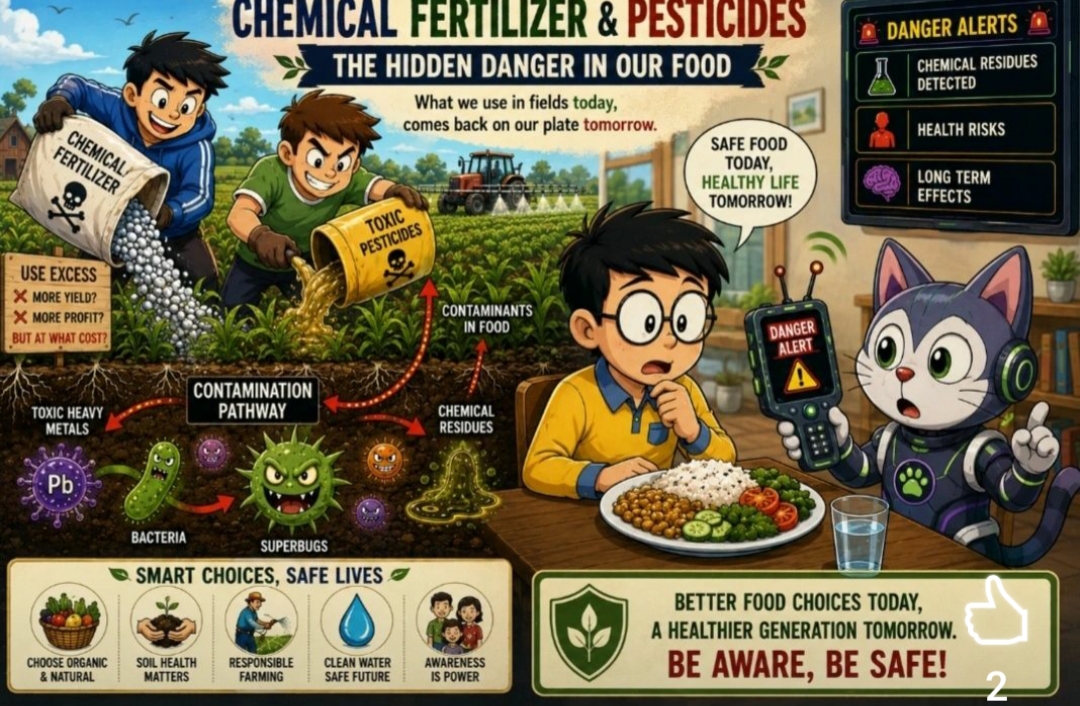
Slow Poison on the Plate: The Invisible Chemical Chain From Soil to DNA
Strapline: The Green Revolution may have filled our granaries, but the indiscriminate use of fertilizers and pesticides is no longer just contaminating our groundwater—it is quietly altering human fertility and the DNA of future generations.
Every morning, as you sit down for breakfast or lunch, you likely imagine a wholesome, nourishing meal. Yet recent data emerging from scientific laboratories paints an alarming reality: the soil in which our food grows, the groundwater used for irrigation, and the air we breathe have converged into an invisible chemical continuum that is driving profound biological changes in the human body.
The question is no longer merely what we are eating, but whether we are unknowingly compromising the biological future of our descendants.
The Dark Side of Fertilizers: When Life-Giving Nutrients Turn Toxic
For decades, nitrogen fertilizers have been poured into farmlands to maximize crop yields. The paradox is that crops absorb only a fraction of the nitrogen applied. The unabsorbed surplus seeps deep into aquifers as nitrates, while a significant portion escapes into the atmosphere as nitrous oxide (N_2O)—a potent greenhouse gas accelerating global warming.
Scientific studies reveal that the presence of herbicides like glyphosate further disrupts this delicate soil cycle. The critical blind spot in agricultural policy has been an obsessive focus on input volume rather than environmental capacity: we asked how much fertilizer to add, but never calculated how much toxic runoff the ecosystem could endure.
Silent Infiltration: Crops as Heavy Metal Carriers
The accumulation of heavy metals—such as cadmium, lead, arsenic, and chromium—in agricultural soil has escalated into a major public health hazard. What makes this threat insidious is that many crops absorb these toxins without exhibiting signs of phytotoxicity. The crop remains lush and green, yet the grain itself becomes a carrier of chronic toxicity.
Cadmium travels from root vacuoles through xylem and phloem vessels directly into the edible tissues of the plant. Similarly, paddy fields irrigated with contaminated water or enriched with untreated poultry manure absorb significant quantities of arsenic. This inorganic arsenic enters the human bloodstream and digestive tract directly through our staple diet.
From Field to Fertility: The Direct Strike on Reproduction and Embryos
This crisis extends well beyond metabolic and hepatic disorders. Clinical research has uncovered a direct link between agrochemical exposure and declining fertility:
Sperm Quality Degradation: Exposure to organophosphorus pesticide metabolites damages sperm membranes and impairs mitochondrial function, leading to significant drops in cleavage and blastocyst formation rates.
Lead and Conception: Elevated blood lead levels (BLL) in women correlate directly with increased difficulties and delays in achieving natural pregnancy.
IVF Lab Vulnerabilities: Ambient PM_{2.5} and ozone pollutants alter the metabolic profile of follicular fluid in women, impairing oocyte competence and embryo quality during assisted reproduction.
The Illusion of Safe Replacements: Endocrine disruptors like BPA and parabens, commonly found in packaging and consumer products, hijack hormonal pathways. Alarmingly, substitute compounds like BPF and BPAF exhibit comparable toxicological profiles, exposing the flawed logic of regrettable chemical substitution.
Sewage and Sludge: The Emerging Superbug Reservoir
Untreated municipal sewage and industrial sludge applied to farmlands are no longer just physical waste; they act as primary reservoirs for antibiotic-resistant genes (ARGs). When introduced to soil, these effluents encourage horizontal gene transfer, turning benign soil bacteria into multi-drug-resistant superbugs. Consequently, our food chain risks eroding the efficacy of modern clinical antibiotics.
What Next? A Concrete Action Plan for Policy, Farm, and Fork
The warning bells have sounded. The presence of toxins across the food chain is an established fact; the pressing issue is how citizens, farmers, and policymakers respond. Rather than waiting for the next public health emergency, action is urgently required across three fronts:
1. For Consumers: Smarter Dietary Choices
Prioritize Local and Seasonal: Off-season fruits and vegetables carry the highest residues of pesticides and growth regulators. Opt for local, seasonal produce.
Effective Washing Protocols: Soak produce in lukewarm water with salt or diluted vinegar for 15–20 minutes prior to cooking to reduce surface chemical residues.
Ditch Plastic Storage: Avoid storing hot, oily, or acidic foods in plastic containers, and eliminate microwaving in plastic to prevent BPA and plasticizer leaching.
2. For Farmers: Precision and Soil Health
Adopt Precision Farming: Replace blanket fertilizer applications with targeted dosing informed by regular Soil Health Card analyses.
Utilize Bio-Amendments: Apply balanced micro-nutrients like zinc and selenium, which naturally downregulate heavy metal uptake in staple crops.
3. For Policymakers: Stringent Regulation and Surveillance
Establish a National Testing Grid: Mandate regular, transparent testing of produce for heavy metals and chemical residues across wholesale markets and supply chains.
Ban Untreated Sludge Usage: Prohibit the agricultural use of untreated urban sewage and industrial sludge to disrupt the transmission of antibiotic-resistant genes into farmland.
The Bottom Line
The toxic chain connecting degraded soil to human cells will not dismantle itself. Sustainable farming cannot simply mean maximizing tonnage; it requires a systemic transition where ecological stability, food safety, and long-term public health are treated as non-negotiable priorities. The time to intervene is now—starting from agricultural policy down to the choices made in our daily kitchens