

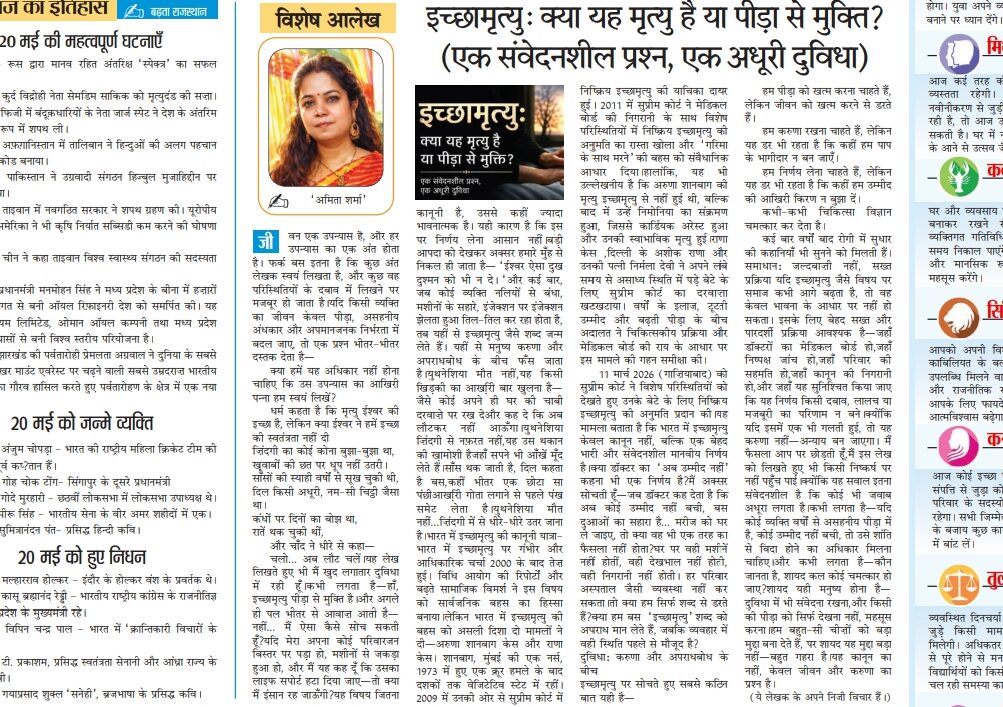
Euthanasia: A Right to Die or Relief from Suffering?

Literature has always offered different perspectives on death. John Donne challenged the arrogance of death, arguing that it is not as powerful as humans imagine it to be. Dylan Thomas urged people not to surrender quietly to death but to fight for life until their very last breath. Mary Oliver, on the other hand, viewed death as a natural and peaceful part of life’s eternal cycle. Together, these voices remind us that both life and death deserve to be approached with dignity, awareness, and acceptance.
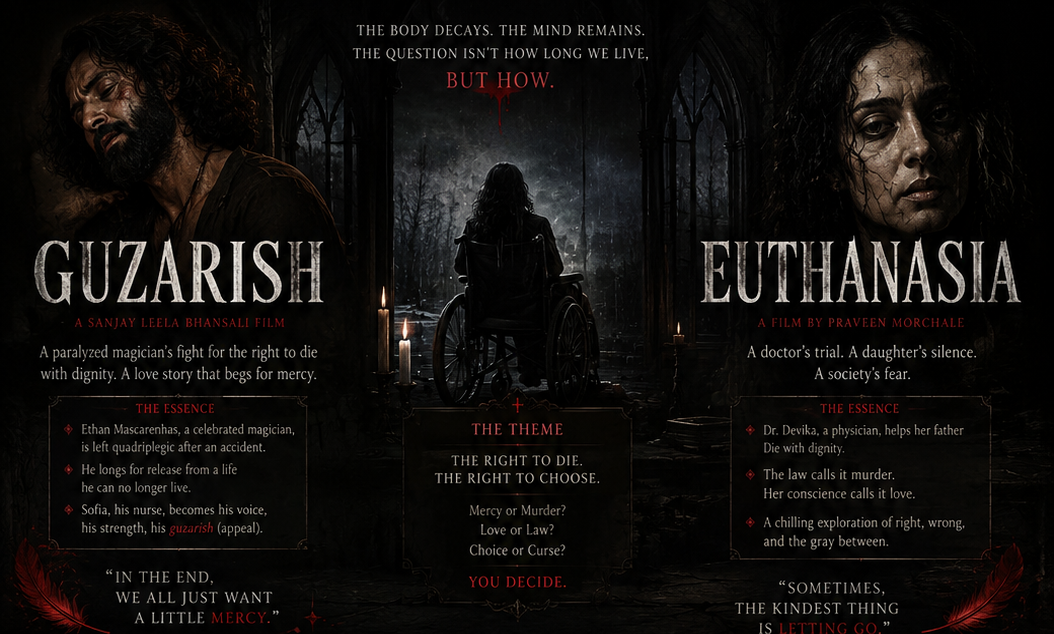
Life is considered the most fundamental human right. Yet when life becomes synonymous with unbearable pain, incurable illness, and complete dependence, a difficult question emerges: Should an individual have the right to choose a dignified death? This question lies at the heart of the global debate on euthanasia.
The term “euthanasia” is derived from Greek words meaning “good death” or “peaceful death.” Today, euthanasia is not merely a medical issue; it intersects with law, ethics, religion, human rights, and personal autonomy. Researchers across the world continue to examine this deeply complex and emotionally charged subject.
What is Euthanasia?
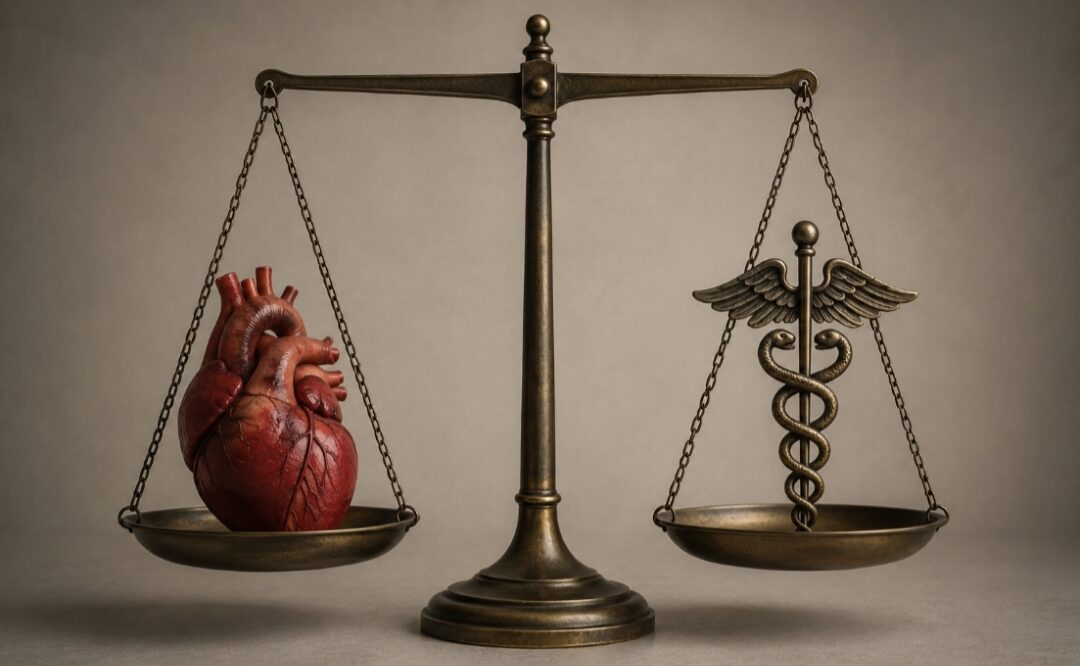
Euthanasia is generally categorized into two forms. Active euthanasia involves taking direct medical action to end a person’s life. Passive euthanasia involves withdrawing or withholding life-sustaining treatment, allowing the natural process of death to occur.
Research studies suggest that supporters of euthanasia view it as an extension of personal autonomy and human dignity. They argue that individuals suffering from terminal illnesses and unbearable pain should have the right to make decisions about their own lives. Opponents, however, maintain that the right to life cannot be interpreted as a right to die and warn about the potential misuse of such provisions.
India’s Legal Journey on Euthanasia
The legal debate on euthanasia in India largely began with the case of Aruna Shanbaug. After suffering a brutal assault in 1973, Aruna remained in a persistent vegetative state for more than four decades. Her case eventually reached the Supreme Court of India and sparked a national conversation on the right to die with dignity.
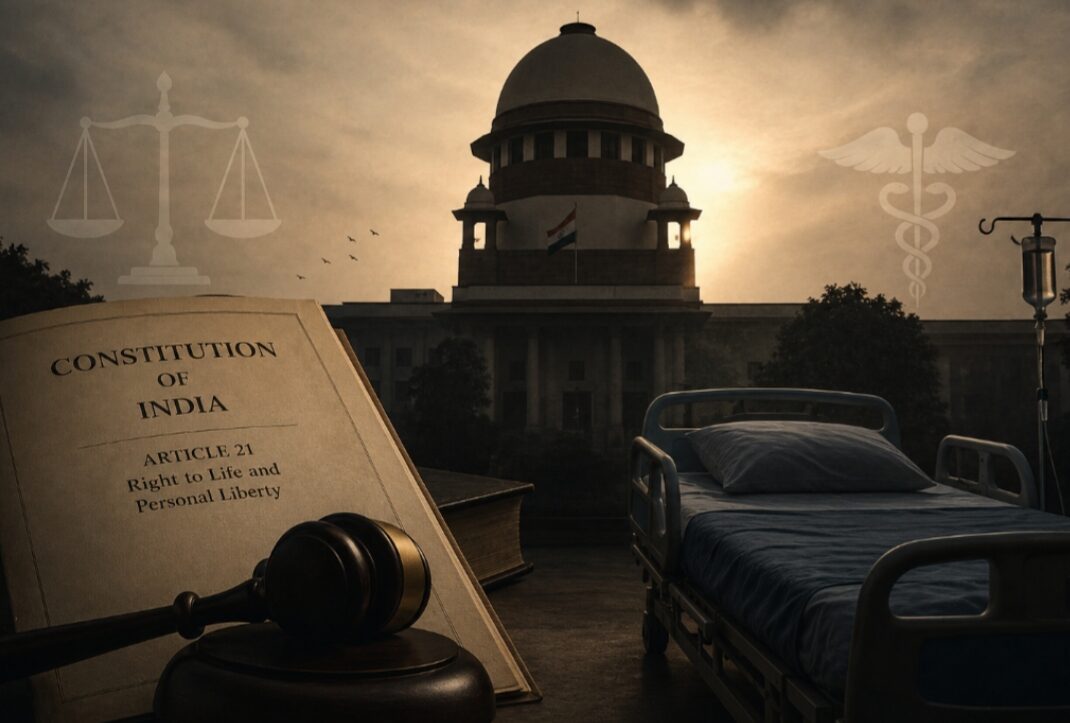
On March 7, 2011, a two-judge bench comprising Justice Markandey Katju and Justice Gyan Sudha Misra delivered a landmark judgment. While the Court rejected the plea for euthanasia in Aruna Shanbaug’s case, it recognized for the first time that passive euthanasia could be permitted under exceptional circumstances. The Court held that withdrawal of life support could be allowed with the approval of the concerned High Court.
A more comprehensive constitutional foundation emerged on March 9, 2018, in the landmark case of Common Cause vs. Union of India. A five-judge Constitution Bench comprising Chief Justice Dipak Misra, Justice A.K. Sikri, Justice A.M. Khanwilkar, Justice D.Y. Chandrachud, and Justice Ashok Bhushan held that the “Right to Die with Dignity” is an integral part of Article 21 of the Indian Constitution.
The judgment also recognized the legal validity of the Living Will.
Living Will: The Right to Record One’s Final Wishes

Any discussion on euthanasia in India remains incomplete without understanding the concept of a Living Will.
A Living Will, also known as an Advance Medical Directive, is a legal document through which a person can specify in advance the kind of medical treatment they wish—or do not wish—to receive if they become terminally ill, permanently unconscious, or incapable of making decisions in the future.
In simple terms, it allows individuals to express their wishes regarding life-sustaining treatment before such a situation arises.
The purpose of a Living Will is not to choose death but to preserve personal dignity and autonomy when a person is no longer capable of communicating their choices.
To prevent misuse, the Supreme Court established strict safeguards, including medical review procedures and legal oversight before such directives can be implemented.
International Perspective: How the World Views Euthanasia
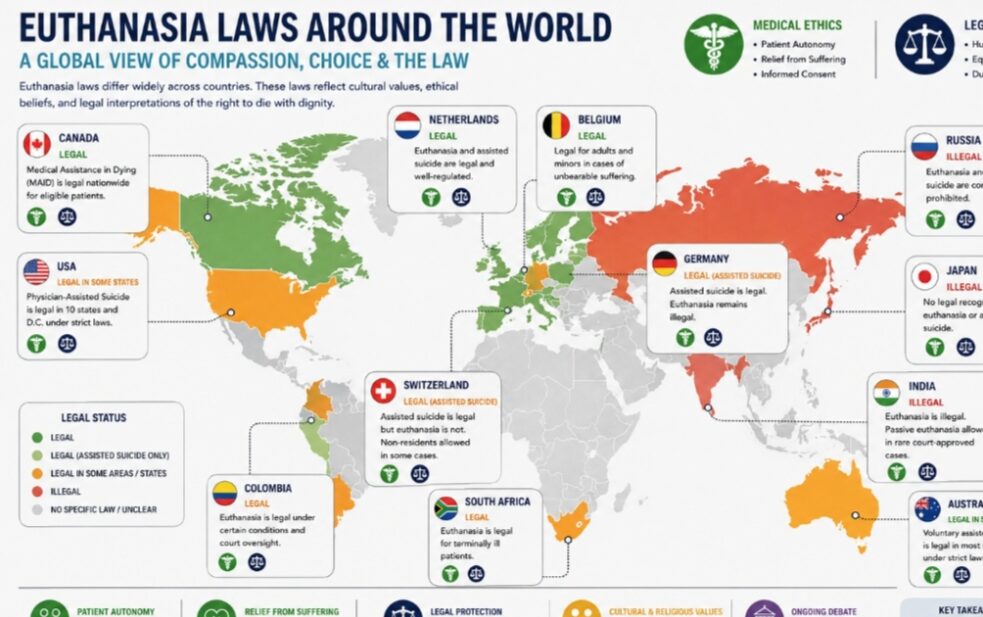
The global community remains divided on the issue of euthanasia.
The Netherlands became the first country in 2002 to legalize active euthanasia and physician-assisted dying under strict conditions. Belgium followed the same year, while Luxembourg later adopted similar legislation.
Canada introduced its Medical Assistance in Dying (MAiD) law in 2016, allowing eligible individuals with grievous and irremediable medical conditions to seek medical assistance in ending their lives.
Switzerland permits assisted suicide under certain conditions, although active euthanasia remains illegal.
In the United States, laws vary by state. States such as Oregon, California, and Washington allow physician-assisted dying under specific legal frameworks, while many others continue to prohibit it.
In contrast, most Asian, African, and Middle Eastern nations continue to prohibit active euthanasia, often citing ethical, cultural, and religious concerns.
These international examples demonstrate that the central question is not merely whether death should be permitted, but how societies should respect dignity, autonomy, and relief from suffering in the face of terminal illness.
Arguments For and Against Euthanasia
Supporters argue that euthanasia respects human dignity and personal freedom. They believe that individuals enduring unbearable suffering should have the right to determine how they wish to spend the final moments of their lives.
Opponents argue that legalizing euthanasia could create opportunities for abuse, particularly among vulnerable populations such as the elderly, disabled, or economically disadvantaged. Many medical professionals also believe that a physician’s duty is to preserve life rather than end it.
The Challenge Before Indian Society
In a country as diverse as India, the debate becomes even more complex. Religious beliefs, family structures, healthcare inequalities, and ethical considerations all influence public opinion on euthanasia.
India has attempted to adopt a balanced approach. Active euthanasia remains illegal, while passive euthanasia and Living Wills have been recognized under strict legal and medical safeguards. This approach seeks to balance personal autonomy with societal responsibility.
Conclusion
The literary perspectives of John Donne, Dylan Thomas, and Mary Oliver may differ, but together they lead us to a profound truth: both life and death deserve dignity. The euthanasia debate ultimately revolves around a fundamental question—should human beings merely continue to exist, or do they also possess the right to leave this world with dignity?
Some nations regard euthanasia as an extension of personal liberty, while others see it as a challenge to the sanctity of life. India has chosen a path somewhere in between, recognizing not death itself, but the concept of a dignified death.
Perhaps that is why euthanasia remains one of the most sensitive, complex, and thought-provoking issues of our time.
While writing this article, I studied legal judgments, research papers, ethical arguments, and stories of human suffering. Yet even after completing it, I find myself unable to reach a definitive conclusion. On one side lies the compassionate desire to relieve unbearable pain; on the other stands the belief in the sanctity and possibility of life until its final moment.
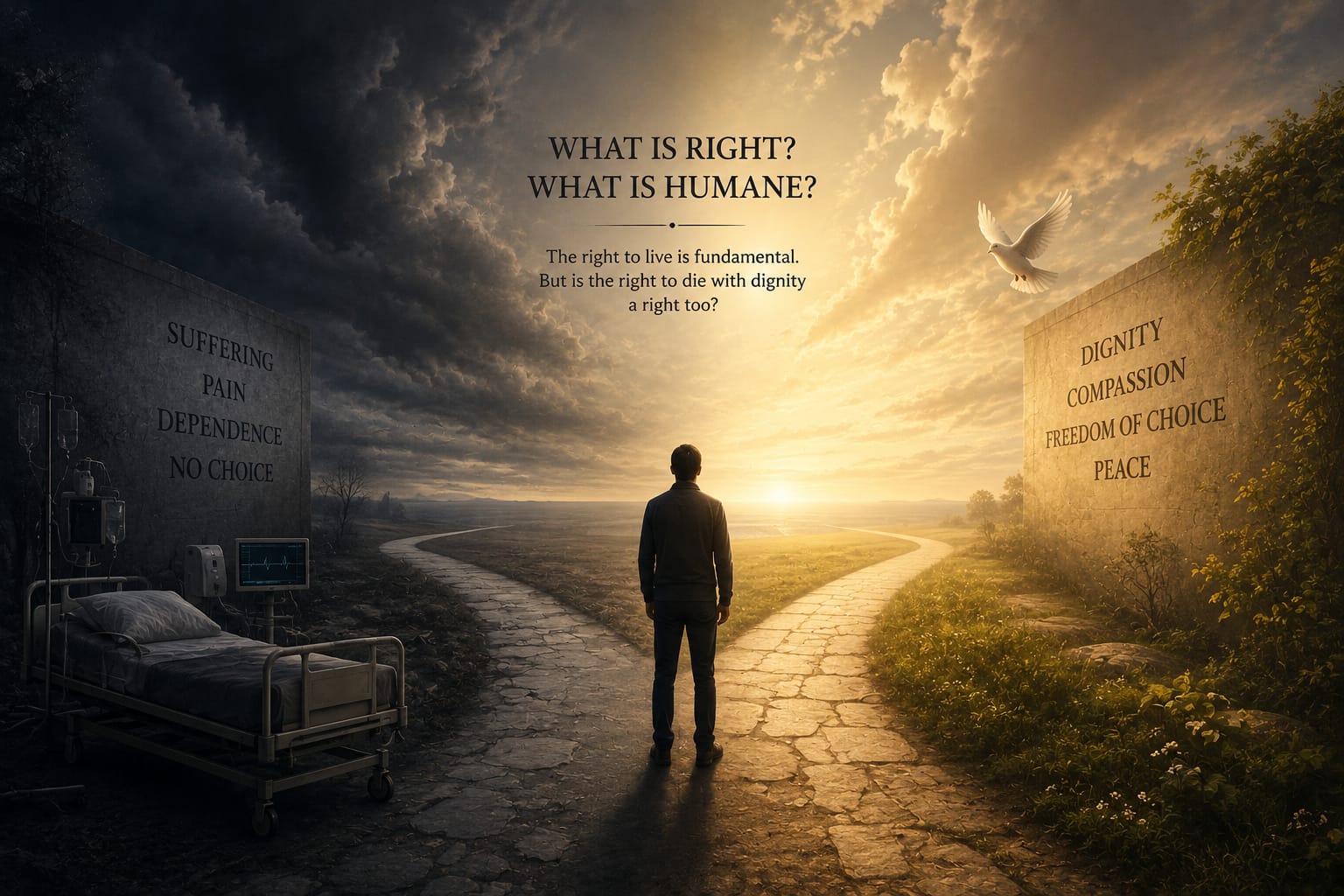
As a human being, I find myself caught in this conflict between emotion and reason. Therefore, I leave the final judgment to you.
If life is reduced merely to survival and dignity slowly begins to disappear, is euthanasia an act of compassion, a human right, or a decision we should avoid at all costs?
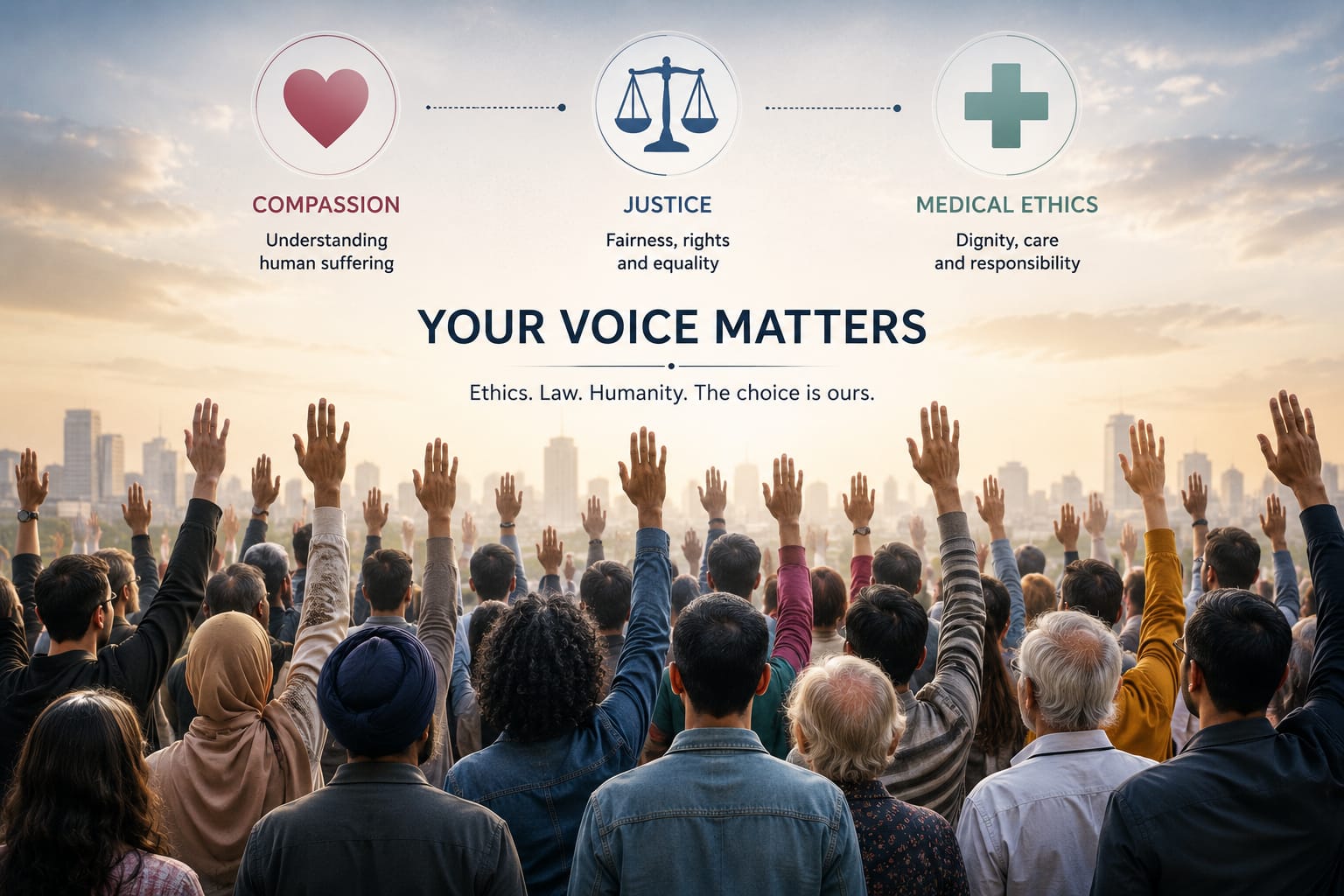
What do you think?
Reader Poll
Should euthanasia be allowed in India under limited circumstances?
◯ Yes, if a person is suffering from a terminal illness and unbearable pain.
◯ No, the right to life should never be intentionally ended.
◯ Only after strict medical and legal r
eview.
◯ I am still undecided on this issue.