AI Skills vs College Degree: What Matters More for Students in 2026?
Degree vs. Skill: The Efforts of Our Industrial Titans and the System’s Failure
Come on, we are living in 2026, a time when AI and automation are reaching new heights every single day, yet students in our country’s premier engineering institutes are still studying outdated cars and their ancient components. Technologies like the ‘MacPherson strut’ or ‘Synchromesh gearbox’ used in older Audi or Mercedes models, which came out half a century ago, are still crammed into our syllabus.
Just think about it—when these kids walk into an interview at a major company tomorrow, they will be completely blindsided! Today’s cars run on ‘Electronically Controlled Active Suspension’, ‘Electric Vehicle (EV) Drivetrains’, and sensor-based systems for autonomous driving. The technology that companies use on the shop floor in the morning doesn’t even make it to our college blackboards by afternoon. If kids don’t even know the basics of these modern advancements, what will happen to their careers? It’s truly disheartening.
This begs the question: Did our legendary industrialists like Tata, Ambani, or Birla never think about this?
That’s not true at all. In fact, they built phenomenal institutes on their own. Take Birla’s ‘BITS Pilani’, famous for its ‘Practice School’ model where students directly work in companies to get hands-on experience. Similarly, Ambani’s Reliance Foundation started the ‘Jio Institute’, which focuses entirely on new-age technologies like AI and Data Science.
Even new age schools like mesa, scaler and newton are trying to integrate more akill based practical learning rather than traditional rote learning.
But this is exactly where the catch lies. These institutes are fantastic, but they have ended up becoming mere “Islands of Excellence.” Their fees are so high and seats so limited that they are accessible to only 1 or 2 percent of wealthy or exceptionally selected students. The remaining 98 percent of the country’s youth is still grinding away in traditional government universities and colleges where the syllabus hasn’t been touched in decades.
If we look at the rest of the world, Germany’s government and industry leaders collaborate through the ‘Federal Institute for Vocational Education and Training’ to decide exactly what gets taught in colleges. Singapore runs brilliant initiatives like ‘SkillsFuture’ that constantly upgrade every citizen with changing times. In our country, until the Ministry of Education makes this kind of industrial partnership legally mandatory, this gap will never close.
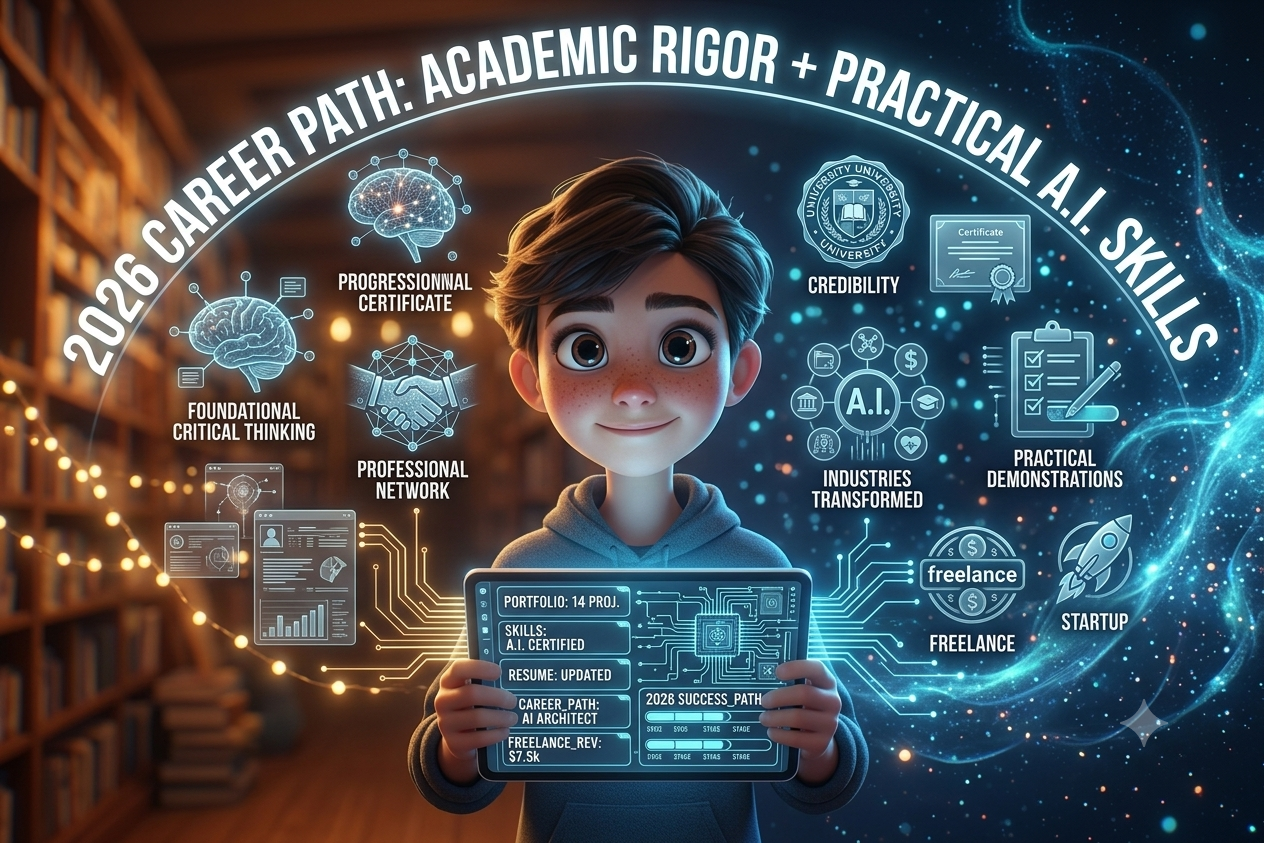
But the problem goes even deeper. The real tragedy today is the double burden on our students—having to pursue a college degree and then separately do ‘skill-based’ courses just to be employable. And the bright students who can afford it are leaving the country after graduating from these big-name colleges. They are heading to countries like the US, Canada, or Australia just to build a proper portfolio.
But why? Why do our finest minds have to cross oceans just to prove their talent? Where exactly are we falling short?