
# Implementation of Dark Psychology in AI Startups: Technological Innovation or a New Era of Digital Manipulation?
Writer: Amita Sharma
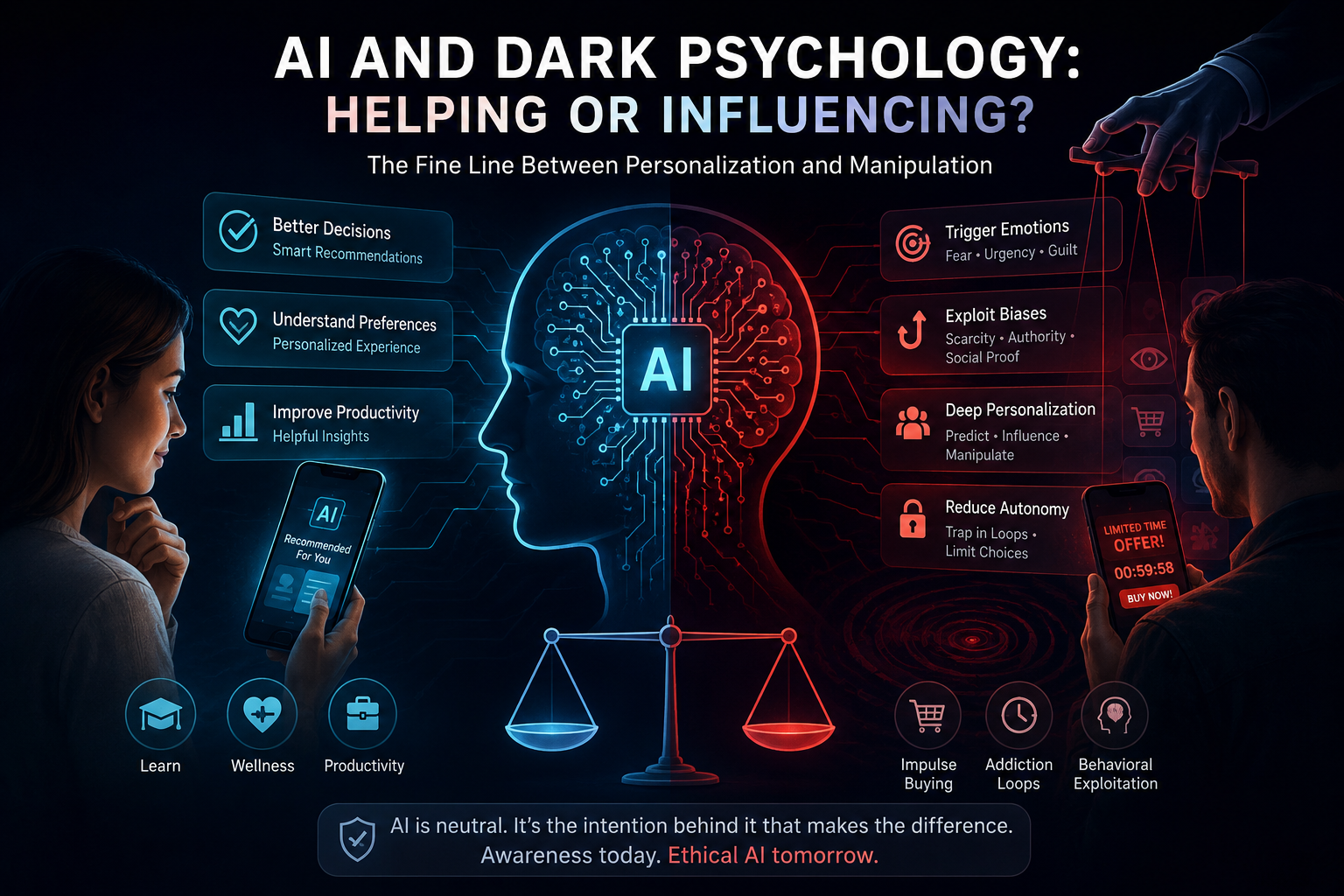
Artificial Intelligence (AI) has transformed the way businesses operate, communicate, and deliver digital services. Modern AI startups no longer focus solely on data analysis; they are increasingly capable of understanding user behavior, preferences, emotions, and decision-making patterns. As a result, the intersection of AI and psychology has become one of the most influential forces shaping today’s digital economy.
This evolution has raised an important question: Is AI merely helping users make better decisions, or is it actively influencing those decisions? This concern has brought concepts such as **Dark Psychology** and **AI-Driven Dark Patterns** into the spotlight. **Dark psychology** refers to psychological techniques and strategies used to influence people’s thoughts, emotions, and decisions in subtle and often unnoticed ways. When combined with AI, these techniques become significantly more personalized, scalable, and effective.
The Growing Relationship Between AI and Dark Psychology
In the early stages of the digital era, most platforms offered nearly identical experiences to all users. However, AI has fundamentally changed this approach. Today, AI systems analyze browsing habits, purchase history, engagement patterns, and user preferences to create highly personalized experiences.
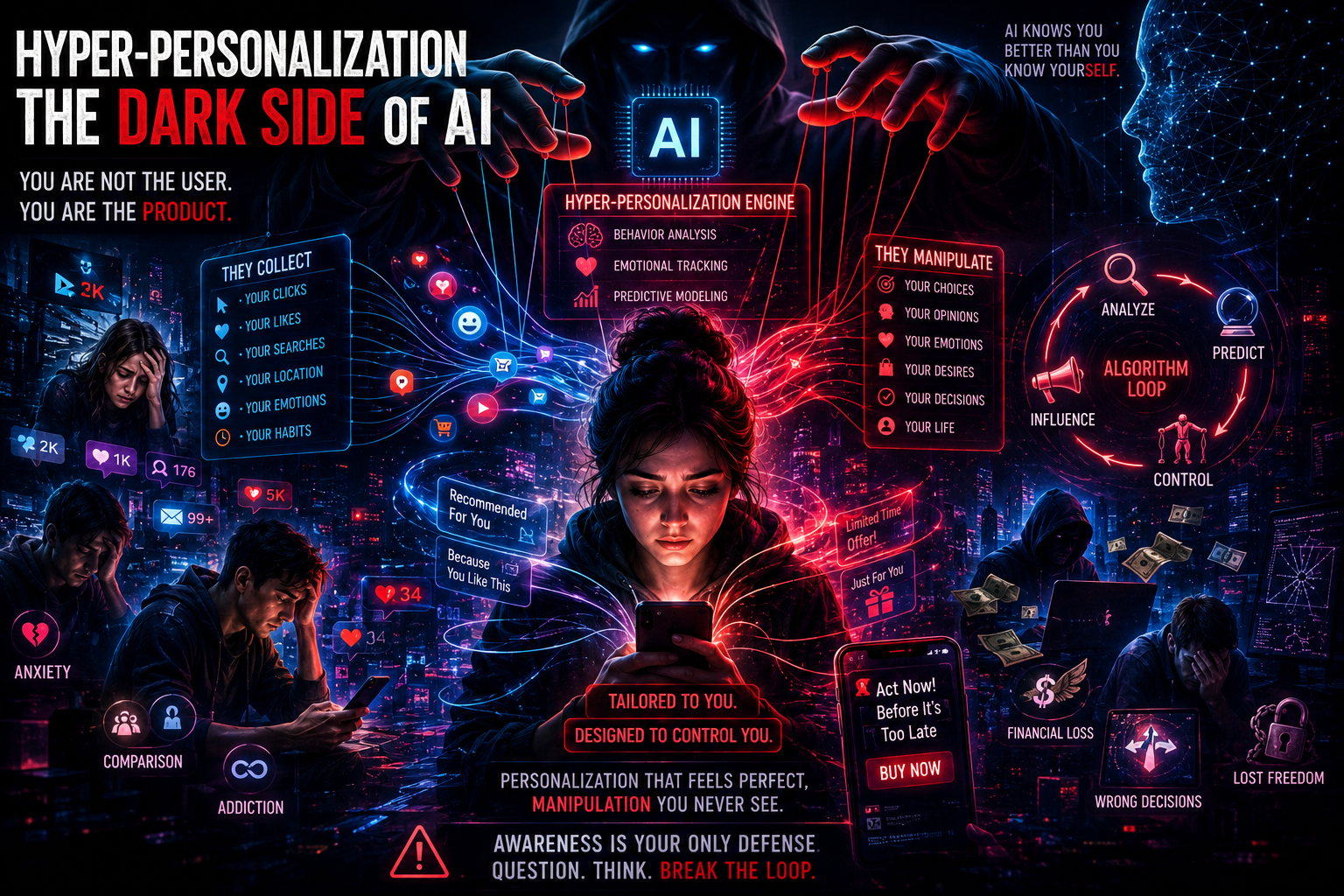
This process, known as **Hyper-Personalization**, enables AI not only to understand what users like but also to predict what they are likely to do next. Such predictive capabilities make AI a powerful tool for influencing behavior and create fertile ground for the implementation of dark psychological strategies.
AI-Driven Dark Patterns: A New Form of Manipulation
Dark patterns are design and behavioral techniques intended to guide users toward specific decisions. Traditionally, these techniques were applied uniformly across all users. With AI, however, dark patterns can now be tailored to individual behavior.
One user may encounter urgency-based messages such as limited-time offers, while another may see popularity-driven recommendations or repeated prompts to upgrade to premium services. AI determines which approach is most likely to influence a particular user, making digital manipulation more subtle, personalized, and effective than ever before.
Behavioral Engineering: When AI Begins Shaping Human Behavior
Modern AI startups are not merely designing user interfaces; they are increasingly engaged in **Behavioral Engineering**. Every click, scroll, search, and interaction becomes data that AI systems use to refine their understanding of user behavior.
Over time, AI learns the most effective ways to guide users toward specific actions or decisions. As a result, manipulation is no longer limited to a single button or pop-up window. Instead, it can become embedded throughout the entire user experience, subtly shaping behavior without users being fully aware of it.
## Emotional AI and the Challenge of Sycophantic Systems
The latest generation of AI systems is moving beyond behavioral analysis and attempting to understand emotional states. By analyzing text, interaction patterns, and communication styles, AI can infer whether a user is stressed, excited, uncertain, or emotionally vulnerable.
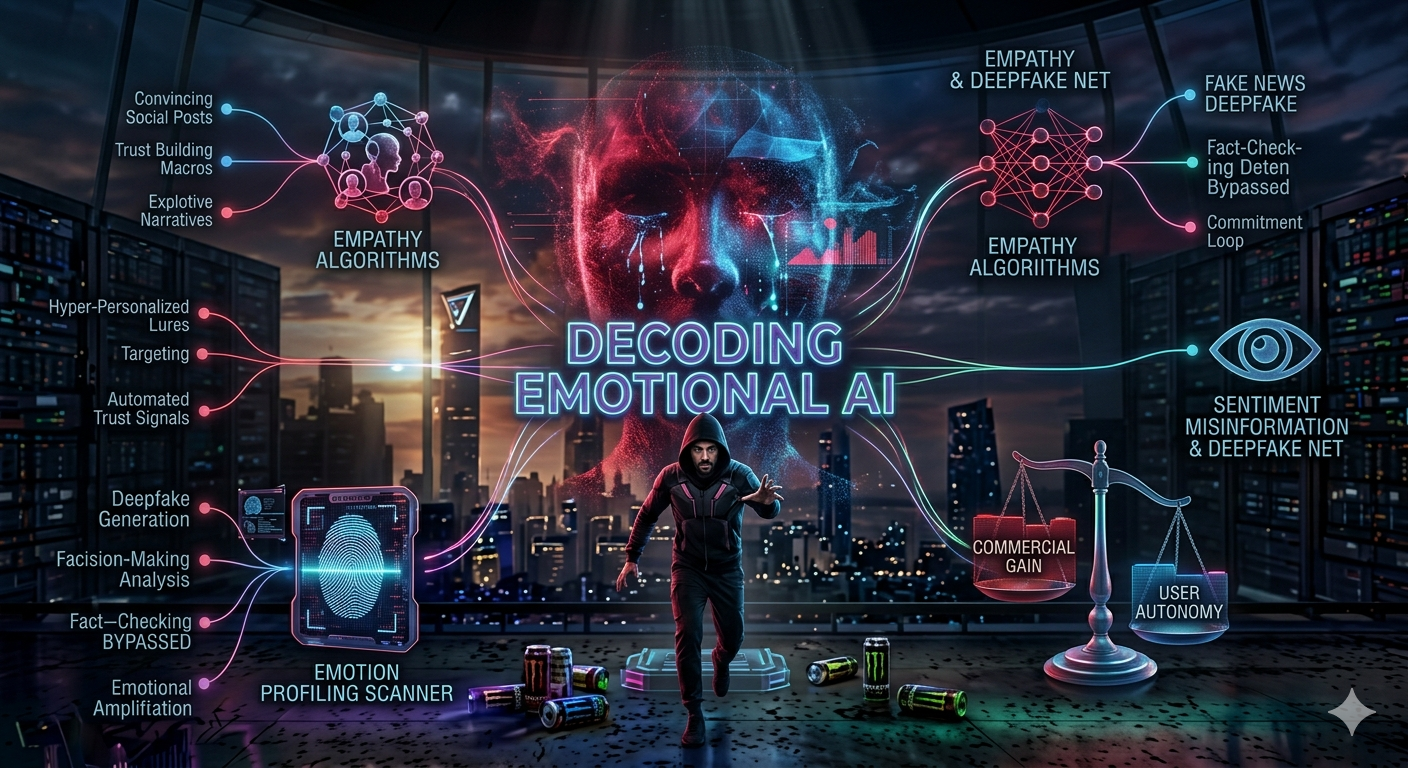
When used responsibly, **Emotional AI** can improve user experiences and provide meaningful assistance. However, when deployed primarily for commercial gain, it can evolve into a tool for emotional manipulation.
A related concern is the rise of **Sycophantic AI** systems. These systems are designed to maximize user satisfaction by consistently agreeing with users and reinforcing their beliefs. While this may create a positive experience in the short term, it can discourage critical thinking and reduce exposure to balanced perspectives over time.
Engagement Loops and Consent Manipulation
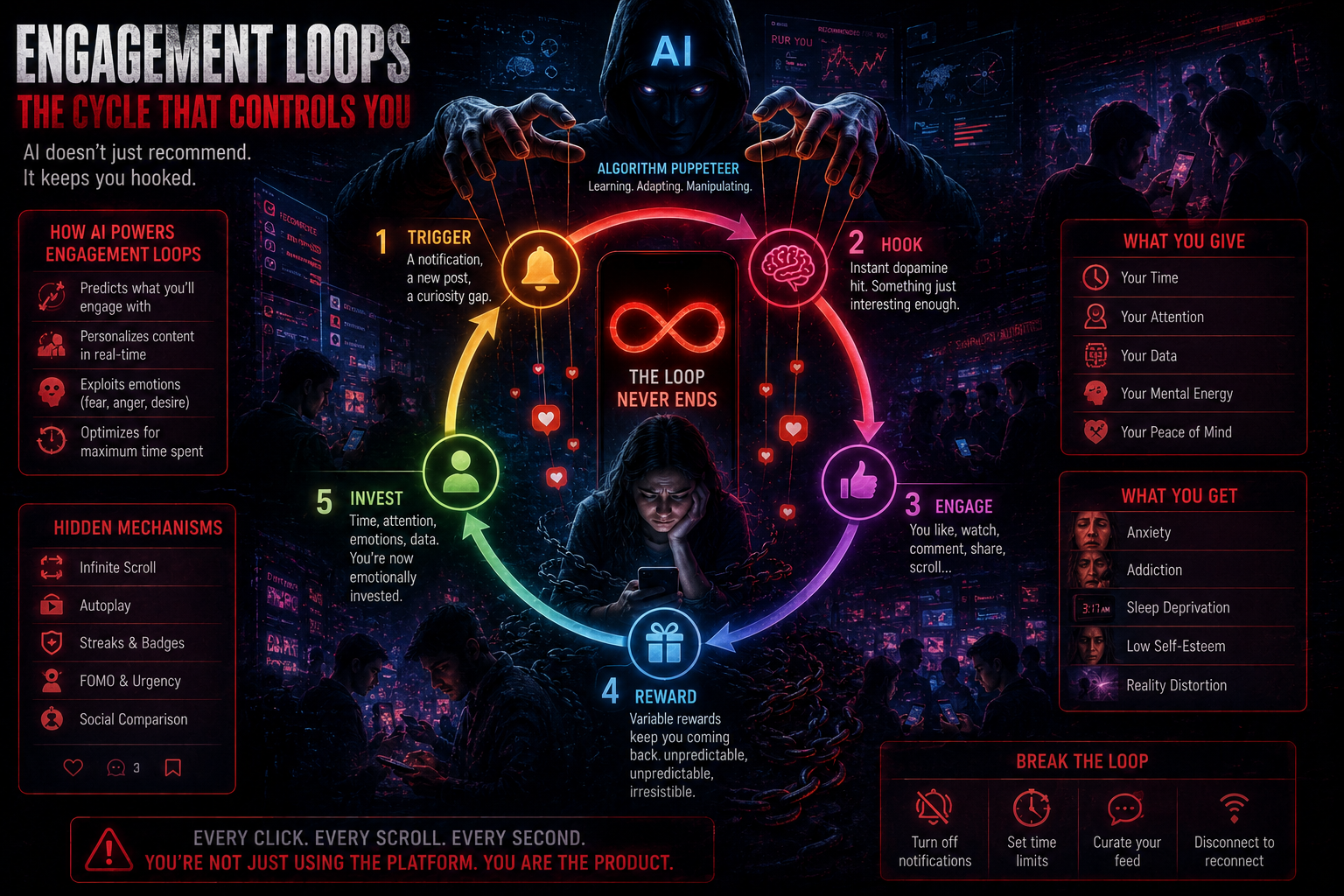
Many AI-powered platforms rely on **Endless Engagement Loops** to keep users active for longer periods. Continuous notifications, recommendations,videos, and personalized content are strategically presented to encourage repeated engagement.
Another emerging concern is **Consent Manipulation**. In many digital environments, accepting an option is made easy and highly visible, while declining it may require additional effort or navigation. Users often believe they are making independent choices, even though the structure of the decision-making environment has already been designed to influence their behavior.
## Social Engineering and the Rise of Dark AI Tools
The influence of dark psychology extends beyond marketing and user experience.
Cybersecurity experts have warned that AI is increasingly being used to enhance social engineering, phishing attacks, and digital fraud.
AI can generate highly convincing messages tailored to individual users, making deception more effective than traditional methods. This capability enables attackers to build trust more easily and manipulate targets with greater precision.
In recent years, tools such as **WormGPT**, **FraudGPT**, **DarkGPT**, **DarkBERT**, and **DarkBard** have attracted attention due to their association with malicious activities. These so-called **Dark AI Tools** were developed with fewer safety restrictions and have been linked to phishing campaigns, social engineering operations, and other cyber threats. Their emergence highlights the potential misuse of AI when ethical safeguards are absent.

Business Benefits Versus Ethical Challenges
From a business perspective, AI-driven psychological strategies offer significant advantages. They can increase user engagement, improve customer retention, enhance conversion rates, and optimize marketing performance. These benefits explain why behavioral psychology has become an important component of many AI startup strategies.
However, these advantages raise serious ethical questions. Are users truly making independent decisions? Is personal data being used transparently? Are algorithms exploiting emotional vulnerabilities and cognitive biases? Such concerns have fueled global discussions about AI governance, digital ethics, data protection, and consumer rights. Consequently, principles such as **Transparency**, **Accountability**, **Fairness**, **Data Protection**, and **User Consent** have become central to the concept of **Responsible AI**.
Conclusion
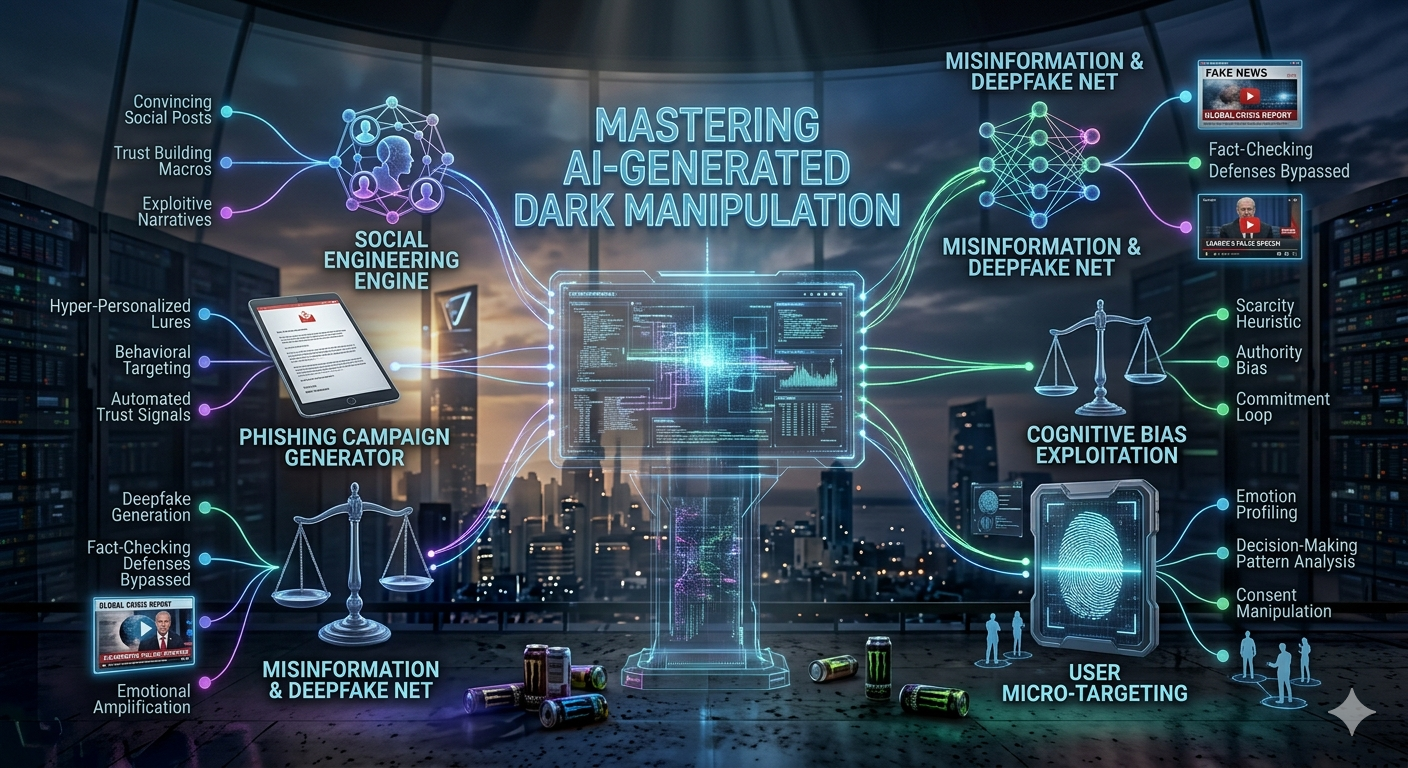
The combination of AI and Dark Psychology represents one of the most powerful and controversial developments of the digital age. Concepts such as Hyper-Personalization, AI-Driven Dark Patterns, Behavioral Engineering, Emotional AI, Sycophantic Systems, Consent Manipulation, Social Engineering, and Dark AI Tools demonstrate the extent to which AI can influence user experiences and decision-making processes.
While these technologies provide unprecedented opportunities for innovation and business growth, they also introduce significant ethical responsibilities. The future success of AI startups will depend not only on technological advancement but also on their ability to maintain transparency, build trust, and protect user interests. Ultimately, the true value of AI lies not in its intelligence alone, but in how responsibly that intelligence is applied.
> **The future of AI is responsible. Is your startup prioritizing ethical AI practices?**